
Planetary cameras
Planetary cameras for imaging Jupiter, Saturn, Mars, the Moon and the Sun. They record fast video, and stacking software keeps the sharpest frames, caught in moments of steady air. This is called lucky imaging. Many of these cameras also work as guide cameras for deep-sky imaging.
Not sure which camera suits your telescope? Call 01743 224 180 or send us a question and we’ll match one to your setup.
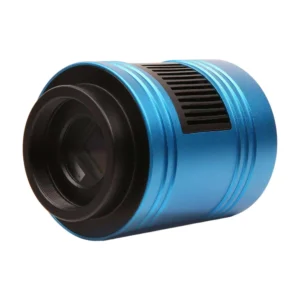 ToupTek G3CMOS08300KPA Colour CameraIMX585 colour · 1/1.2″ · 2.9 µm£415.00Usually in stock
- ToupTek G3CMOS20000KMA Mono CameraIMX183 mono · 1″ · 2.4 µm£690.00Usually in stock
- ToupTek G3CMOS20000KPA Colour CameraIMX183 colour · 1″ · 2.4 µm£520.00Usually in stock
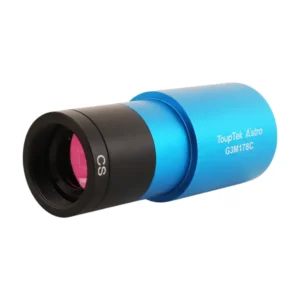 ToupTek G3M178C Colour CameraIMX178 colour · 1/1.8″ · 2.4 µm£225.00Usually in stock
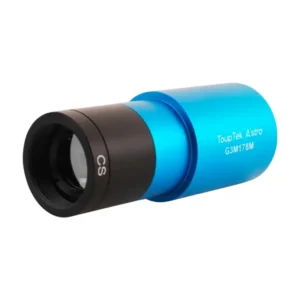 ToupTek G3M178M Mono CameraIMX178 mono · 1/1.8″ · 2.4 µm£245.00Usually in stock
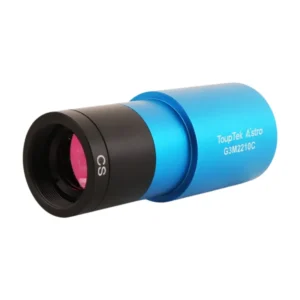 ToupTek G3M2210C Colour CameraSC2210 colour · 1/1.8″ · 4 µm£220.00Usually in stock
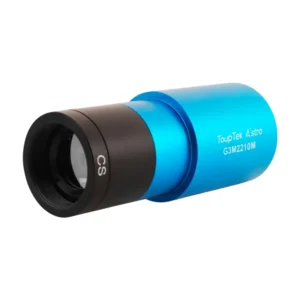 ToupTek G3M2210M Mono CameraSC2210 mono · 1/1.8″ · 4 µm£215.00Usually in stock
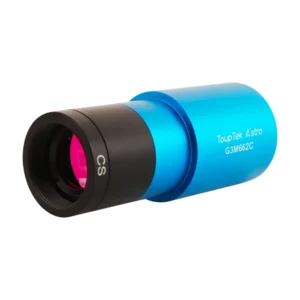 ToupTek G3M662C Colour CameraIMX662 colour · 1/2.8″ · 2.9 µm£195.00Usually in stock
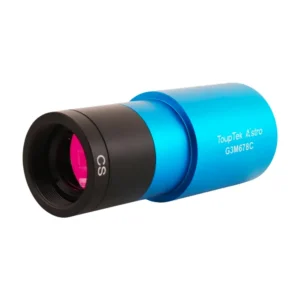 ToupTek G3M678C Colour CameraIMX678 colour · 1/1.8″ · 2 µm£225.00Usually in stock
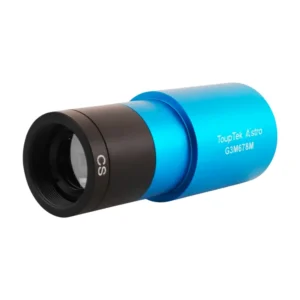 ToupTek G3M678M Mono CameraIMX678 mono · 1/1.8″ · 2 µm£275.00Usually in stock
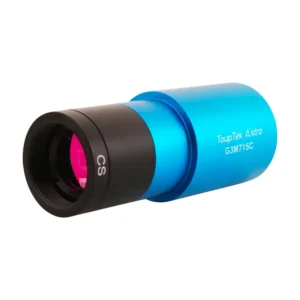 ToupTek G3M715C Colour CameraIMX715 colour · 1/2.8″ · 1.45 µm£135.00Usually in stock
| G3CMOS08300KPA Colour Camera ToupTek | IMX585 colour | No | 1/1.2″ | 12.85 mm | 8.3 MP | 2.9 µm | – | £415.00 | Usually in stock |
| G3CMOS20000KMA Mono Camera ToupTek | IMX183 mono | No | 1″ | 15.9 mm | 20 MP | 2.4 µm | – | £690.00 | Usually in stock |
| G3CMOS20000KPA Colour Camera ToupTek | IMX183 colour | No | 1″ | 15.9 mm | 20 MP | 2.4 µm | – | £520.00 | Usually in stock |
| G3M178C Colour Camera ToupTek | IMX178 colour | No | 1/1.8″ | 9 mm | 6.4 MP | 2.4 µm | 10.7 ke⁻ | £225.00 | Usually in stock |
| G3M178M Mono Camera ToupTek | IMX178 mono | No | 1/1.8″ | 9 mm | 6.4 MP | 2.4 µm | 10.7 ke⁻ | £245.00 | Usually in stock |
| G3M2210C Colour Camera ToupTek | SC2210 colour | No | 1/1.8″ | 8.81 mm | 2.1 MP | 4 µm | 8.5 ke⁻ | £220.00 | Usually in stock |
| G3M2210M Mono Camera ToupTek | SC2210 mono | No | 1/1.8″ | 8.81 mm | 2.1 MP | 4 µm | 8.5 ke⁻ | £215.00 | Usually in stock |
| G3M662C Colour Camera ToupTek | IMX662 colour | No | 1/2.8″ | 6.44 mm | 2.1 MP | 2.9 µm | 39 ke⁻ | £195.00 | Usually in stock |
| G3M678C Colour Camera ToupTek | IMX678 colour | No | 1/1.8″ | 8.8 mm | 8.3 MP | 2 µm | 11.6 ke⁻ | £225.00 | Usually in stock |
| G3M678M Mono Camera ToupTek | IMX678 mono | No | 1/1.8″ | 8.8 mm | 8.3 MP | 2 µm | 11.6 ke⁻ | £275.00 | Usually in stock |
| G3M715C Colour Camera ToupTek | IMX715 colour | No | 1/2.8″ | 6.4 mm | 8.3 MP | 1.45 µm | 6 ke⁻ | £135.00 | Usually in stock |
Colour or mono
A colour camera has a Bayer matrix, a fixed pattern of red, green and blue over the pixels, so the planet comes out in colour from a single video. It’s the simplest way to start. A mono camera has no Bayer matrix and is used with a filter wheel. It gives sharper results, and it’s the usual choice for the Sun in hydrogen-alpha. Only ever image the Sun through a proper solar filter.
Matching a camera to your telescope
Pixel size decides how much magnification you need to record the finest detail, and so whether you need a Barlow lens. Small sensors keep frame rates high, which suits the planets. Larger sensors fit more of the Moon or Sun in one frame. Camera specifications explained shows how pixel size and focal length work together.
We’ll help you choose
Tell us your telescope and whether you’re imaging the planets, the Moon or the Sun, and we’ll suggest a camera and the Barlow to go with it. Call 01743 224 180 or send us a question: we answer the same working day. To compare models yourself, use Compare cameras or Shop by sensor.