
Cooled cameras
Cooled astronomy cameras for deep-sky imaging: galaxies, nebulae and star clusters. Cooling the sensor well below the air temperature keeps noise low through long exposures, so faint detail shows clearly. We stock Player One and ToupTek models in colour and mono, from small sensors for short refractors up to full frame.
Not sure which camera suits your telescope? Call 01743 224 180 or send us a question and we’ll match one to your setup.
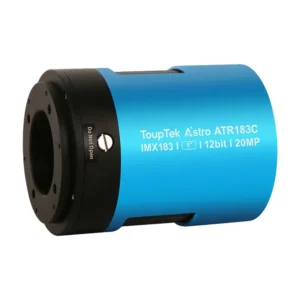 ToupTek ATR183C Colour Cooled CameraIMX183 colour · cooled · 1″ · 2.4 µm£690.00Usually in stock
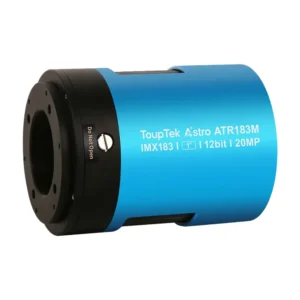 ToupTek ATR183M Mono Cooled CameraIMX183 mono · cooled · 1″ · 2.4 µm£850.00Usually in stock
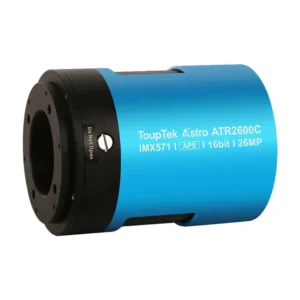 ToupTek ATR2600C Colour Cooled CameraIMX571 colour · cooled · APS-C · 3.76 µm£1,095.00Usually in stock
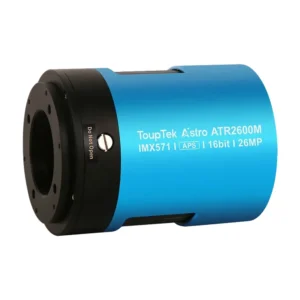 ToupTek ATR2600M Mono Cooled CameraIMX571 mono · cooled · APS-C · 3.76 µm£1,465.00Usually in stock
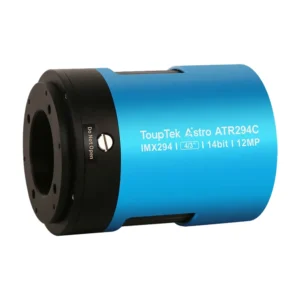 ToupTek ATR294C Colour Cooled CameraIMX294 colour · cooled · 4/3″ · 4.63 µm£675.00Usually in stock
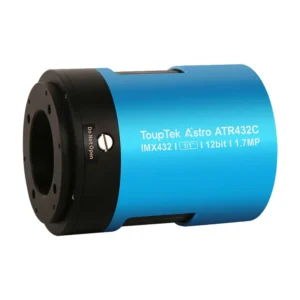 ToupTek ATR432C Colour Cooled CameraIMX432 colour · cooled · 1.1″ · 9 µm£975.00Usually in stock
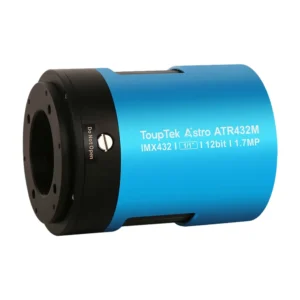 ToupTek ATR432M Mono Cooled CameraIMX432 mono · cooled · 1.1″ · 9 µm£975.00Usually in stock
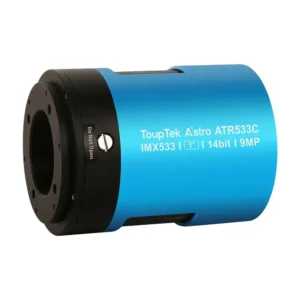 ToupTek ATR533C Colour Cooled CameraIMX533 colour · cooled · 1″ square · 3.76 µm£795.00Usually in stock
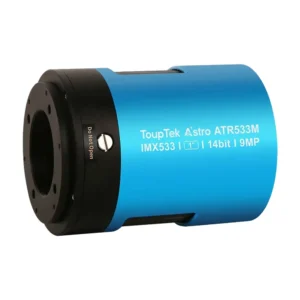 ToupTek ATR533M Mono Cooled CameraIMX533 mono · cooled · 1″ square · 3.76 µm£1,090.00Usually in stock
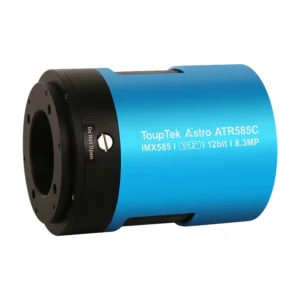 ToupTek ATR585C Colour Cooled CameraIMX585 colour · cooled · 1/1.2″ · 2.9 µm£555.00Usually in stock
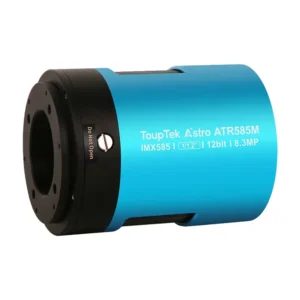 ToupTek ATR585M Mono Cooled CameraIMX585 mono · cooled · 1/1.2″ · 2.9 µm£555.00Usually in stock
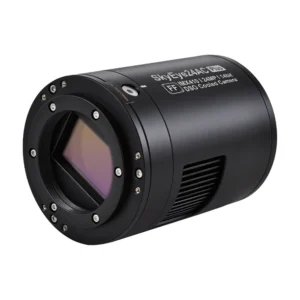 ToupTek SkyEye24AC Plus Colour Cooled CameraIMX410 colour · cooled · Full frame · 5.94 µm£1,720.00Usually in stock
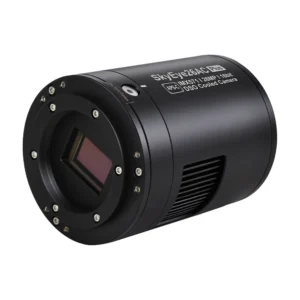 ToupTek SkyEye26AC Plus Colour Cooled CameraIMX571 colour · cooled · APS-C · 3.76 µm£1,095.00Usually in stock
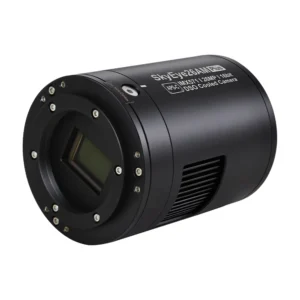 ToupTek SkyEye26AM Plus Mono Cooled CameraIMX571 mono · cooled · APS-C · 3.76 µm£1,465.00Usually in stock
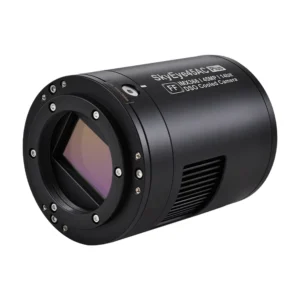 ToupTek SkyEye45AC Plus Colour Cooled CameraIMX366 colour · cooled · Full frame · 4.4 µm£2,020.00Usually in stock
| ATR183C Colour Cooled Camera ToupTek | IMX183 colour | Yes | 1″ | 15.9 mm | 20 MP | 2.4 µm | 15 ke⁻ | £690.00 | Usually in stock |
| ATR183M Mono Cooled Camera ToupTek | IMX183 mono | Yes | 1″ | 15.9 mm | 20 MP | 2.4 µm | 15 ke⁻ | £850.00 | Usually in stock |
| ATR2600C Colour Cooled Camera ToupTek | IMX571 colour | Yes | APS-C | 28.3 mm | 26 MP | 3.76 µm | 51 ke⁻ | £1,095.00 | Usually in stock |
| ATR2600M Mono Cooled Camera ToupTek | IMX571 mono | Yes | APS-C | 28.3 mm | 26 MP | 3.76 µm | 51 ke⁻ | £1,465.00 | Usually in stock |
| ATR294C Colour Cooled Camera ToupTek | IMX294 colour | Yes | 4/3″ | 23.1 mm | 11.7 MP | 4.63 µm | 64 ke⁻ | £675.00 | Usually in stock |
| ATR432C Colour Cooled Camera ToupTek | IMX432 colour | Yes | 1.1″ | 17.5 mm | 1.8 MP | 9 µm | 100 ke⁻ | £975.00 | Usually in stock |
| ATR432M Mono Cooled Camera ToupTek | IMX432 mono | Yes | 1.1″ | 17.5 mm | 1.8 MP | 9 µm | 100 ke⁻ | £975.00 | Usually in stock |
| ATR533C Colour Cooled Camera ToupTek | IMX533 colour | Yes | 1″ square | 16 mm | 9 MP | 3.76 µm | 50 ke⁻ | £795.00 | Usually in stock |
| ATR533M Mono Cooled Camera ToupTek | IMX533 mono | Yes | 1″ square | 16 mm | 9 MP | 3.76 µm | 52 ke⁻ | £1,090.00 | Usually in stock |
| ATR585C Colour Cooled Camera ToupTek | IMX585 colour | Yes | 1/1.2″ | 12.85 mm | 8.3 MP | 2.9 µm | 40 ke⁻ | £555.00 | Usually in stock |
| ATR585M Mono Cooled Camera ToupTek | IMX585 mono | Yes | 1/1.2″ | 12.85 mm | 8.3 MP | 2.9 µm | 38.9 ke⁻ | £555.00 | Usually in stock |
| SkyEye24AC Plus Colour Cooled Camera ToupTek | IMX410 colour | Yes | Full frame | 43.3 mm | 24.5 MP | 5.94 µm | 104 ke⁻ | £1,720.00 | Usually in stock |
| SkyEye26AC Plus Colour Cooled Camera ToupTek | IMX571 colour | Yes | APS-C | 28.3 mm | 26 MP | 3.76 µm | 51 ke⁻ | £1,095.00 | Usually in stock |
| SkyEye26AM Plus Mono Cooled Camera ToupTek | IMX571 mono | Yes | APS-C | 28.3 mm | 26 MP | 3.76 µm | 51 ke⁻ | £1,465.00 | Usually in stock |
| SkyEye45AC Plus Colour Cooled Camera ToupTek | IMX366 colour | Yes | Full frame | 43.1 mm | 44.7 MP | 4.4 µm | 73 ke⁻ | £2,020.00 | Usually in stock |
Colour or mono
A colour camera, often called one-shot colour, has a Bayer matrix: a fixed pattern of red, green and blue over the pixels, so every exposure comes out in colour. It’s the easiest way to start. A mono camera has no Bayer matrix, so every pixel collects all the light. You add a filter wheel and image each colour separately. It takes longer, but gives finer detail and is the better choice for narrowband imaging from light-polluted skies. Camera specifications explained covers the Bayer matrix in more detail.
Matching a camera to your telescope
Sensor size decides how much sky you see. A larger sensor needs a telescope, flattener or reducer that keeps stars sharp and evenly lit right to the corners. Pixel size works with your focal length: smaller pixels suit short refractors, and larger pixels suit longer telescopes. Sensor sizes explained and Camera specifications explained go into both.
We’ll help you choose
Tell us your telescope, your mount and what you want to image, and we’ll suggest a camera to suit, with the adapters you’ll need to reach the right back focus. Call 01743 224 180 or send us a question: we answer the same working day. To compare models yourself, use Compare cameras, or Shop by sensor to see every version of a sensor side by side.