Camera sensor formats such as 1-inch, 1/1.2-inch, APS-C and full frame are names, not measurements. Full frame and APS-C are named after photographic film, and their sizes are real. Every format with “inch” in its name comes from the glass camera tubes of early television. That inch was never the size of the picture.
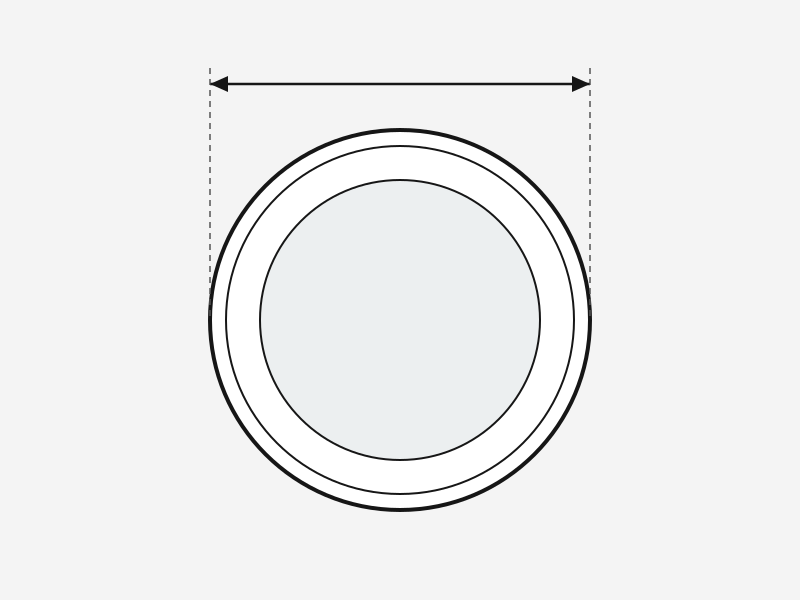
The short answer: a 1-inch sensor measures about 13.2 × 8.8 mm, with a diagonal of 16 mm (0.63 inch). The name comes from a camera tube that measured 1 inch across the outside of its glass. Its usable picture was only about two-thirds as wide.
To see why, we need to go back to 1889. The story follows film into the cinema and the Leica, then into the television studio, and finally into the digital camera. Once you know where each name came from, it makes sense.
Last checked 18 October 2026. Sensor sizes are from the manufacturers’ data for the cameras we sell.
The story in nine dates
| Year | What happened | Name it gave us |
|---|---|---|
| 1889 | Edison’s lab cuts Eastman film into strips 35 mm wide | 35 mm |
| 1925 | The Leica I uses a 36 × 24 mm picture on that film | Full frame |
| 1930s | The first electronic television cameras use glass camera tubes | |
| 1950 | RCA develops the vidicon, a small tube sold by its width in inches | 1-inch, 2/3-inch and the rest |
| 1969 | Bell Labs invents the CCD, the first practical image sensor chip | |
| 1975 | Kodak builds the first digital camera | |
| 1980s–90s | Chips replace tubes and keep the tube names | “Type 1/1.8” and so on |
| 1996 | Kodak, Fujifilm, Canon, Minolta and Nikon launch APS film | APS-C |
| 2002 | The first full-frame digital SLRs, and Olympus and Kodak’s Four Thirds system | Full frame, 4/3 |
1889: a strip of film 35 mm wide
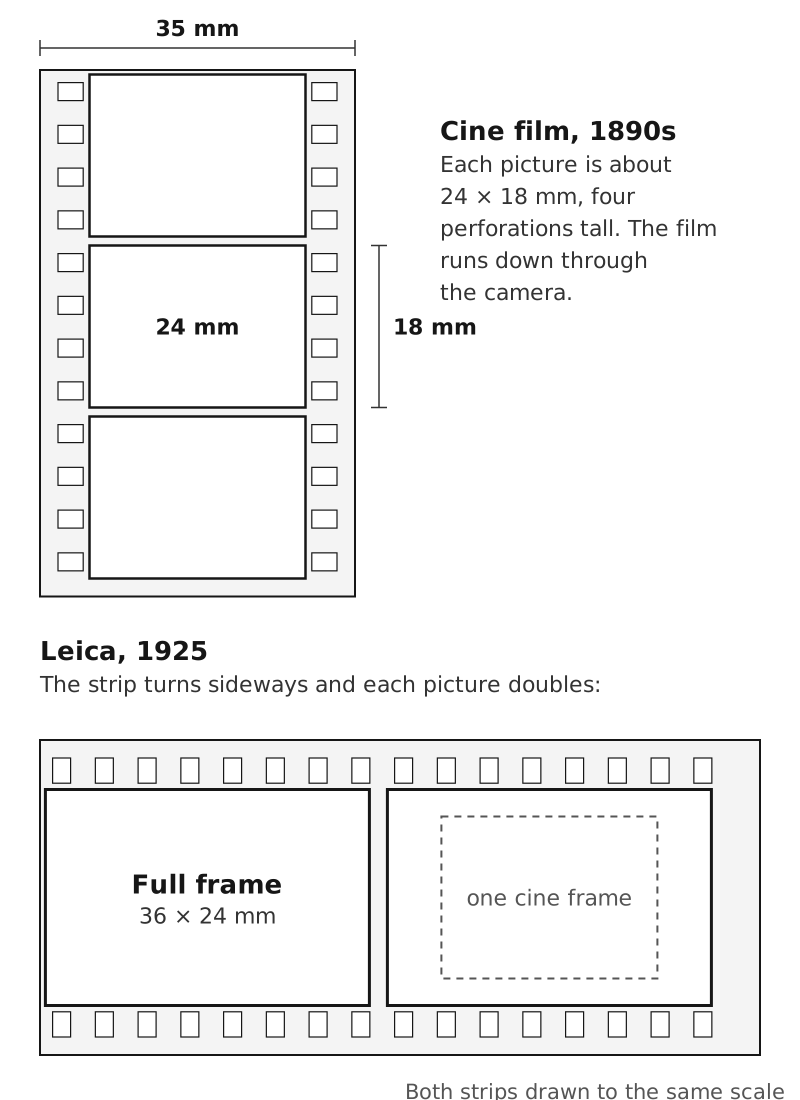
In 1889, William Dickson was building a moving-picture camera in Thomas Edison’s laboratory in New Jersey. He took George Eastman’s 70 mm roll film and slit it down the middle. Each strip was 35 mm wide, with a row of perforations punched down both edges.
Edison’s camera exposed one picture for every four perforations, about 24 × 18 mm. By 1909 the film industry had agreed on 35 mm with four perforations per frame as the world standard.
So “35 mm” is the width of the strip, holes included. It was never the size of a picture.
1925: the Leica doubles the frame
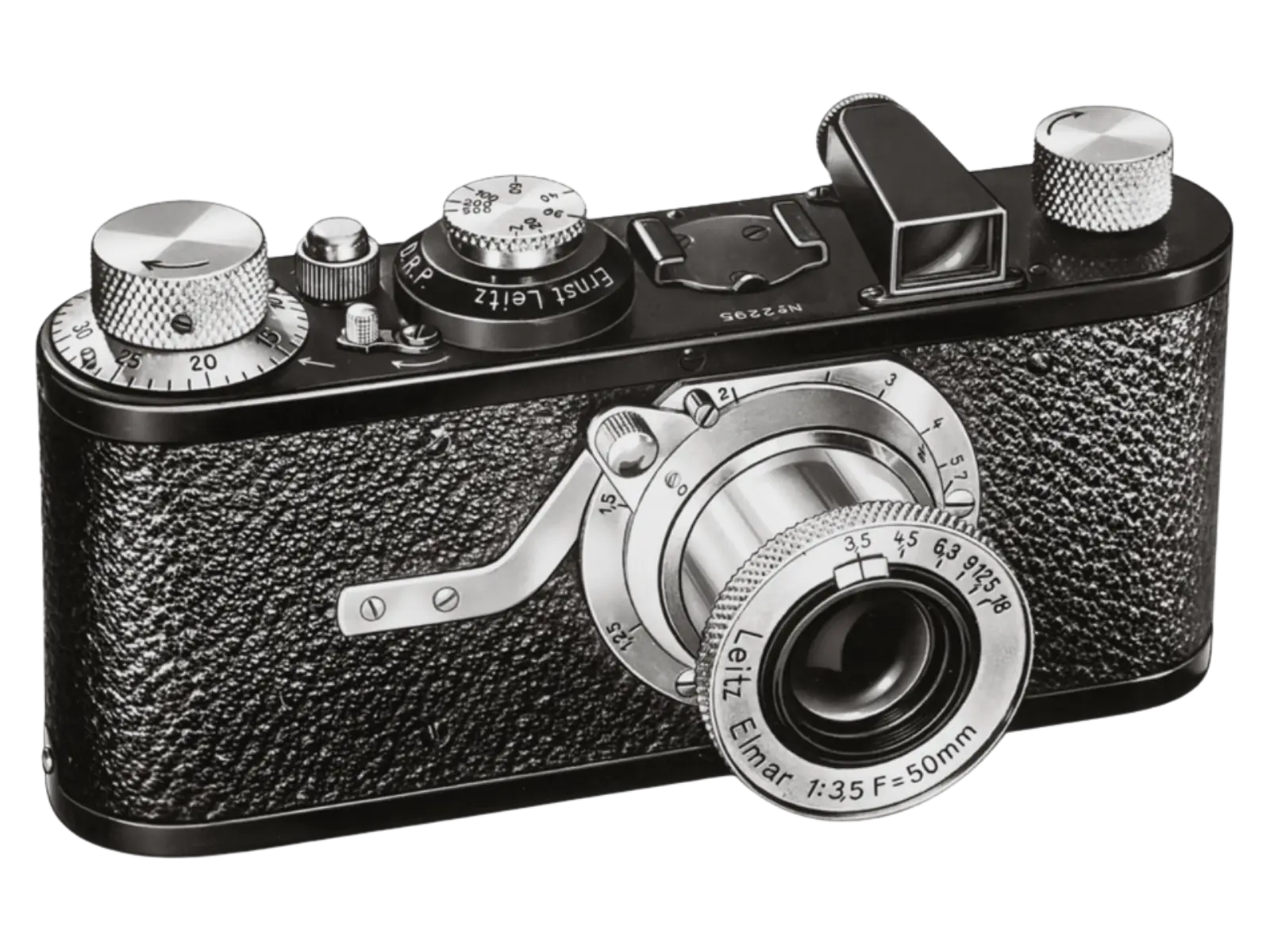
Around 1913, Oskar Barnack, an engineer at Leitz in Wetzlar, built a small camera that used cine film. He turned the strip sideways and used eight perforations for each picture instead of four. That gave a frame of 36 × 24 mm, twice the area of the cine frame, in the 3:2 shape he preferred.
Leitz launched it as the Leica I at the Leipzig Spring Fair in 1925. Its 36 × 24 mm frame became the standard for still photography through the rest of the century.
When digital cameras arrived, a sensor the same size as that frame was called full frame. That is the only format on this page whose name describes its size exactly. The sensors in our full-frame cameras (IMX455, IMX410 and IMX366) all measure about 36 × 24 mm.
The 1930s: television needs an electronic eye
Film records a picture with chemistry. Television needed a way to turn a picture into an electrical signal, many times a second. The answer was the camera tube, used from the 1930s until chips took over in the 1980s and early 1990s.
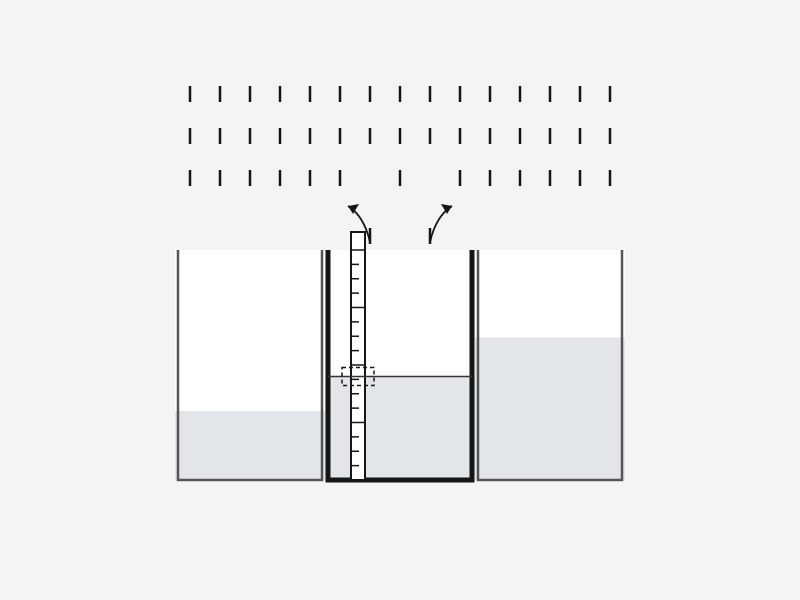
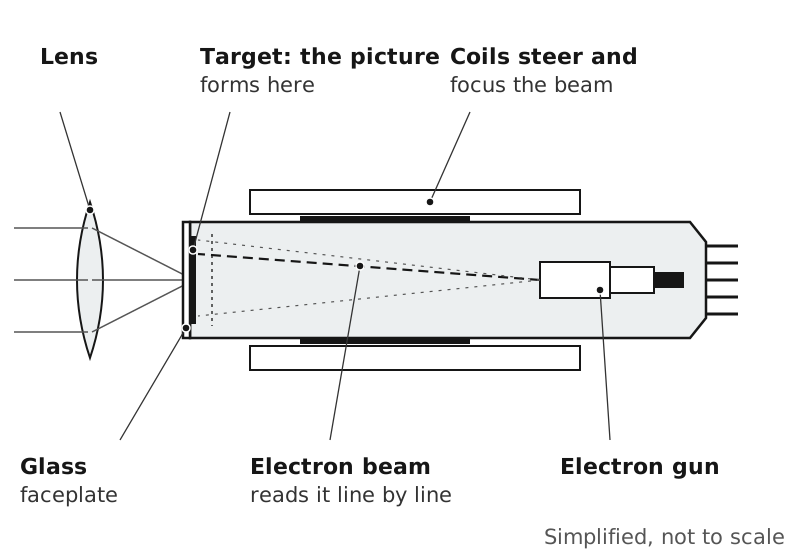
A camera tube is a sealed glass tube with no air inside, a little like an old radio valve. The camera lens focuses the scene onto a light-sensitive coating on the inside of the flat glass end. An electron gun at the other end fires a fine beam down the tube. Coils around the glass bend the beam so it sweeps across the coating line by line. The current it picks up becomes the video signal.
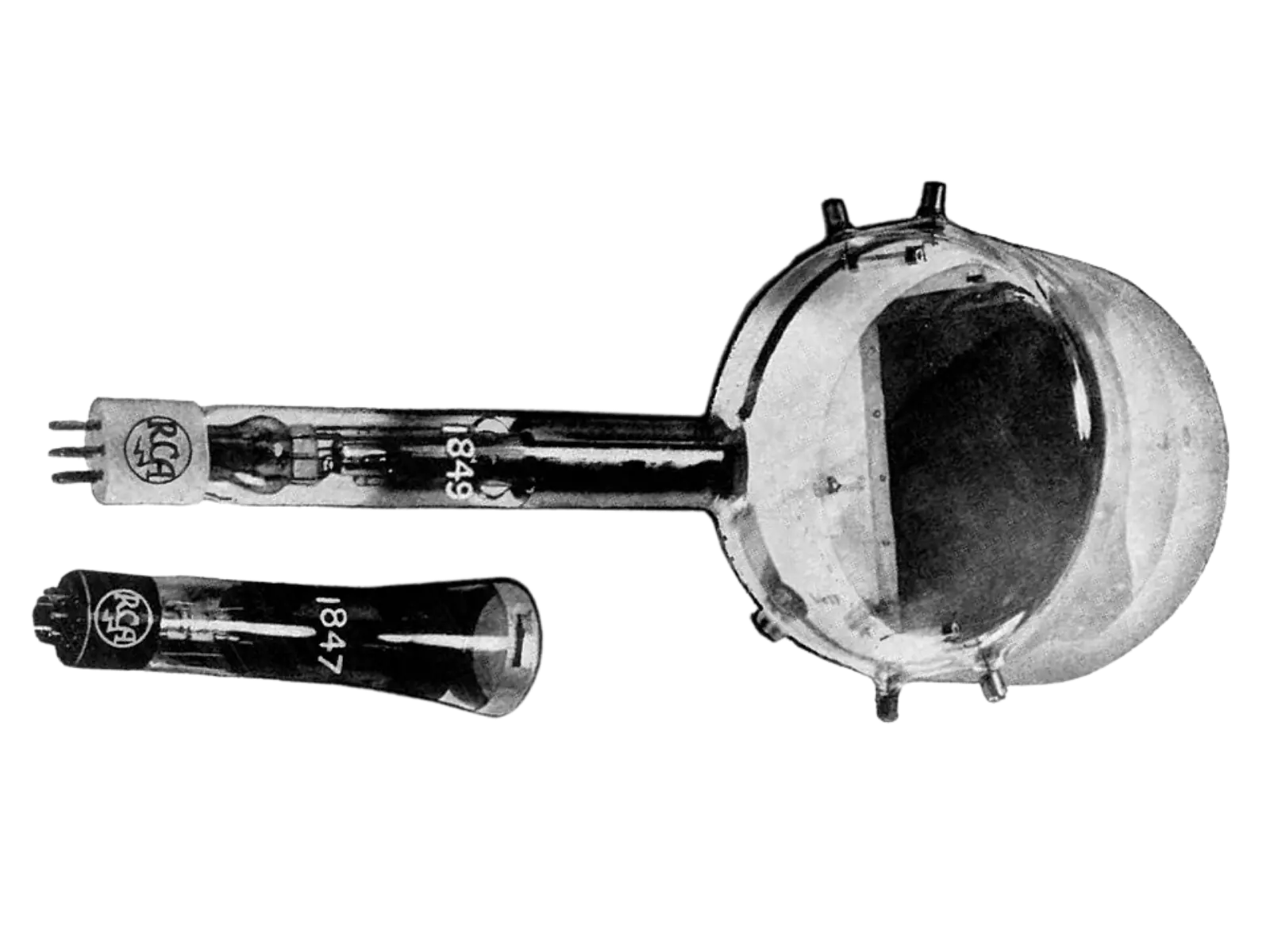
The first tubes were bulky. The iconoscope, shown to the public by RCA in 1933, held its picture plate inside a big glass bulb with a long neck. The image orthicon, in American studios from 1946, was a 3-inch tube about 39 cm long. Britain’s studios used a 4½-inch version, which gave sharper pictures but needed more light.
1950: the vidicon, and the inch
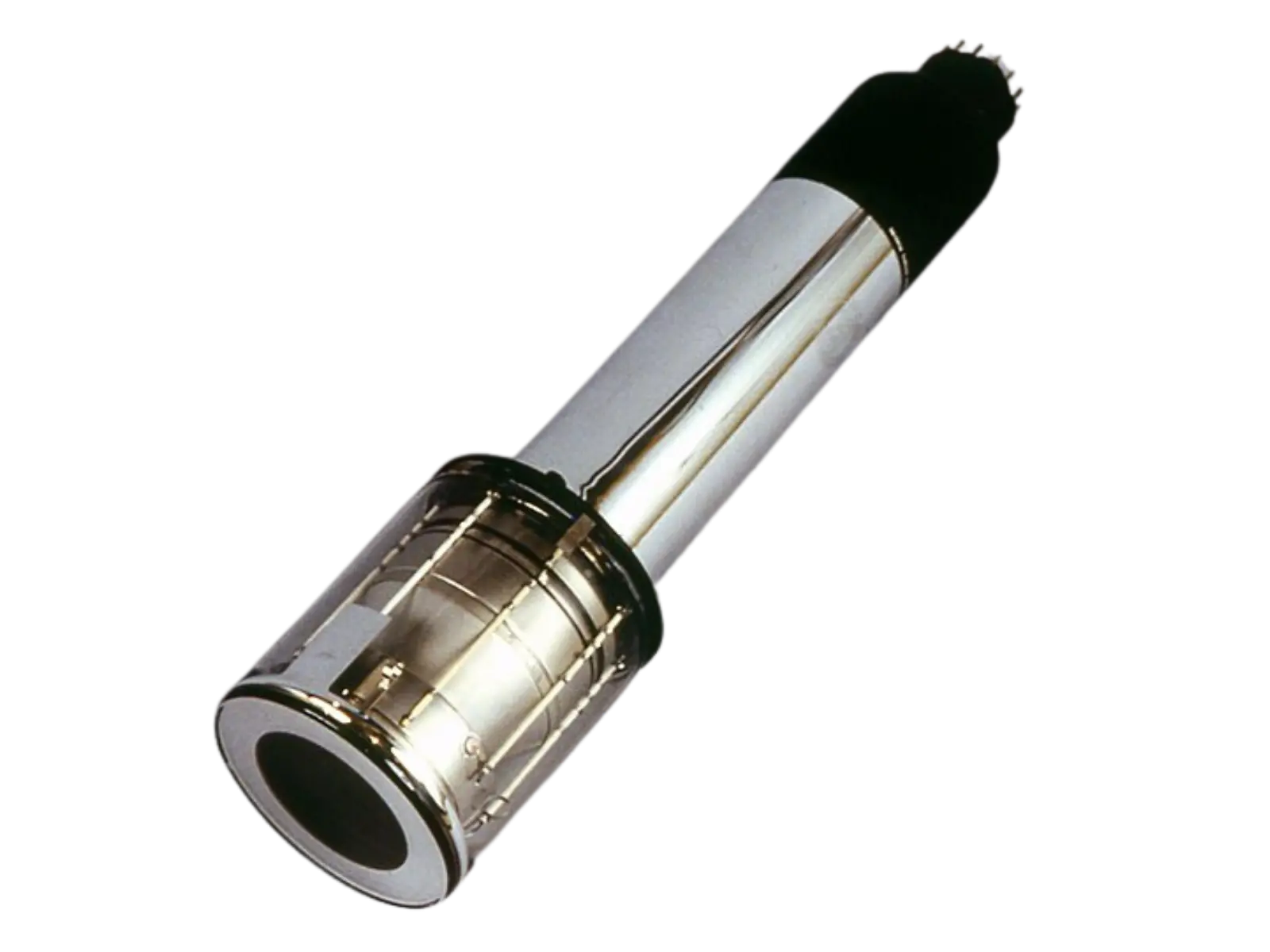
In 1950, P. K. Weimer, S. V. Forgue and R. R. Goodrich at RCA developed the vidicon. It was simpler, smaller and cheaper than the image orthicon. The light-sensitive layer sat directly on the inside of the glass faceplate, and the whole tube fitted in your hand.
Vidicons were sold by the outside diameter of their glass: 1-inch, 2/3-inch, 1/2-inch and so on. Every “inch” sensor name comes from that diameter.
Why a 1-inch tube gave a 16 mm picture
A 1-inch tube is 25.4 mm across, but its picture was only about 16 mm across the diagonal: roughly two-thirds of the tube’s width. Three things took up the rest.
- The glass wall. The tube was measured on the outside. The light-sensitive target sat inside the glass, so the thickness of the wall was lost straight away.
- The edges. Away from the centre, the electron beam landed on the target at a slant, which spoiled the picture. Makers kept the scanned area well inside the rim.
- The shape. Television pictures were rectangles, 4 wide by 3 high. A rectangle that fits inside the sharp central circle uses only part of it.
Philips’ data for its 1-inch Plumbicon tubes gives a scanned picture of 12.8 × 9.6 mm: exactly 16 mm across the diagonal. A modern “1-inch” sensor such as the IMX183 measures 13.2 × 8.8 mm, a diagonal of 15.9 mm. It is named after the tube it replaced, not after its own size.
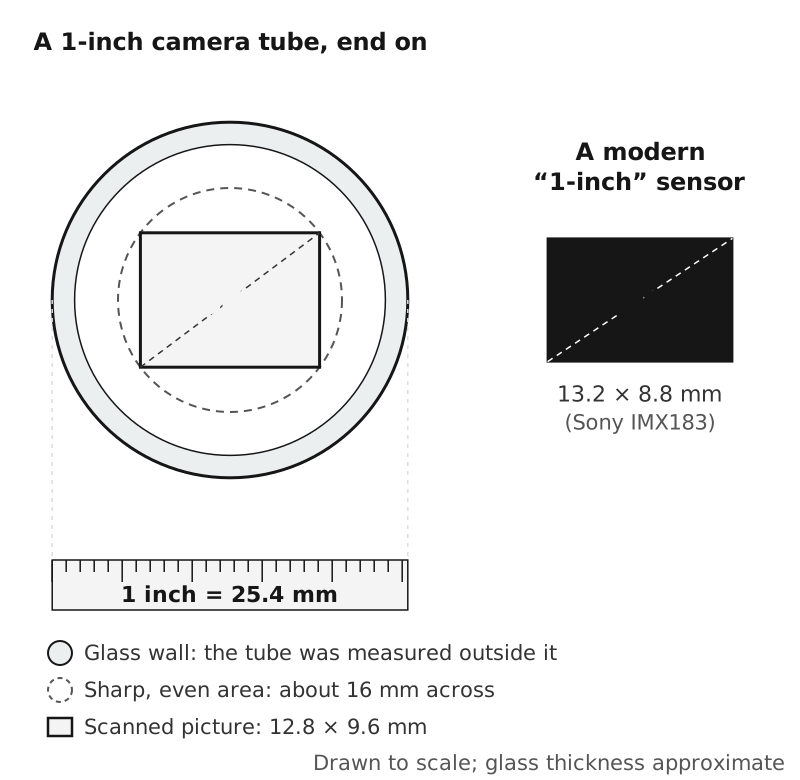
Even the inch was loose. Philips’ “1-inch” Plumbicon measured 25 mm across, while Toshiba listed its 1-inch vidicons at 28.6 mm. The name was a size class, not a measurement.
The standard tube sizes, and why each one existed
Tube makers settled on a handful of sizes. Bigger tubes had room for a sharper, cleaner picture, but they were heavier, used more power, cost more and needed bigger lenses. Smaller tubes made cameras light enough to carry and cheap enough for industry, schools and homes.
Low-light performance depended more on the type of tube than its size. The 3-inch image orthicon was famously sensitive; the 4½-inch version was sharper but less sensitive.
| Tube size | Scanned picture | Main use |
|---|---|---|
| 4½-inch image orthicon | Larger, varied by model | British black-and-white studio cameras, 1950s–60s |
| 3-inch image orthicon | Larger, varied by model | American studio cameras, 1946 to the late 1960s |
| 30 mm (about 1¼-inch) Plumbicon | 17.1 × 12.8 mm | Colour studio cameras, from 1965 |
| 1-inch vidicon or Plumbicon | 12.8 × 9.6 mm | Industrial and medical cameras, film scanning, early portable colour cameras |
| 2/3-inch Plumbicon, Saticon | 8.8 × 6.6 mm | Portable news cameras from the 1970s, then most broadcast cameras |
| 1/2-inch | 6.4 × 4.8 mm | Compact and portable cameras |
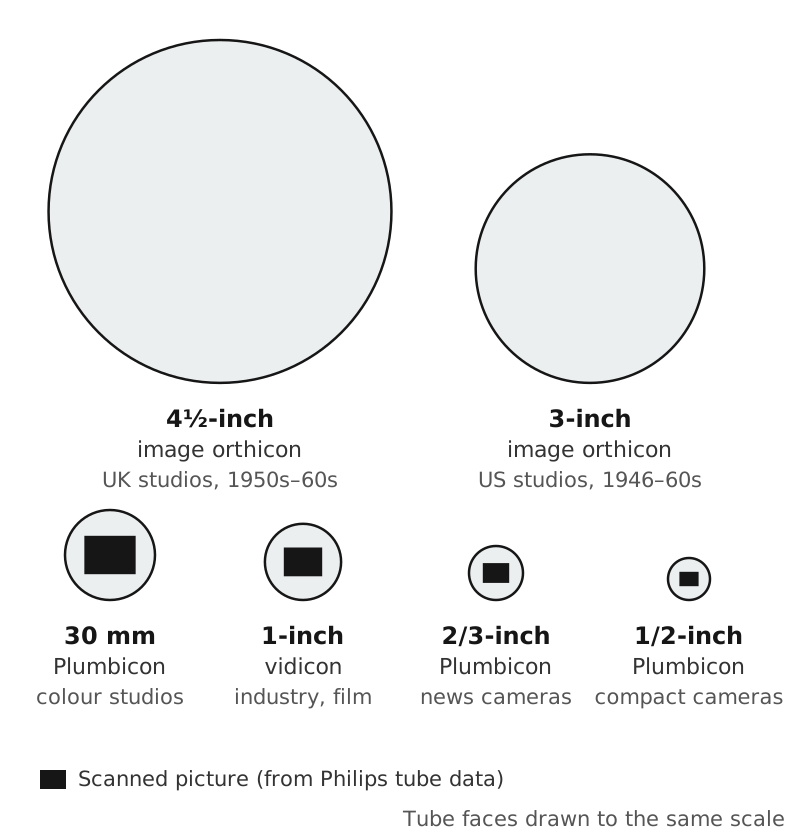
The 2/3-inch size outlived the tubes. Sony’s BVP-300 of 1978 was probably the first camera with the lens mount later standardised as B4, built around a 2/3-inch picture 11 mm across. Television cameras still use 2/3-inch sensors and B4 lenses today. The IMX429 in our Player One Apollo-M Mini is a 2/3-inch sensor too.
Vidicons went to the planets
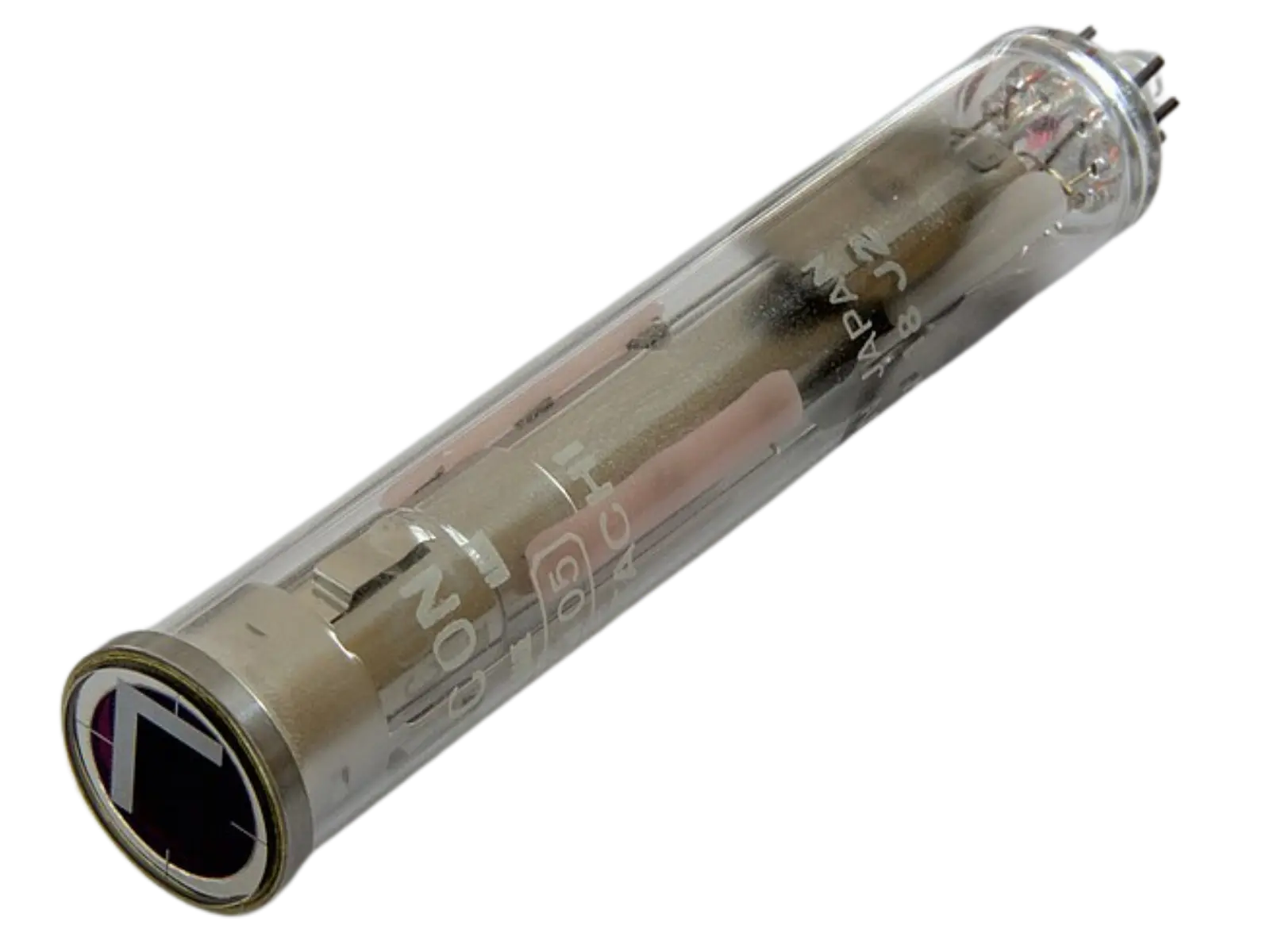
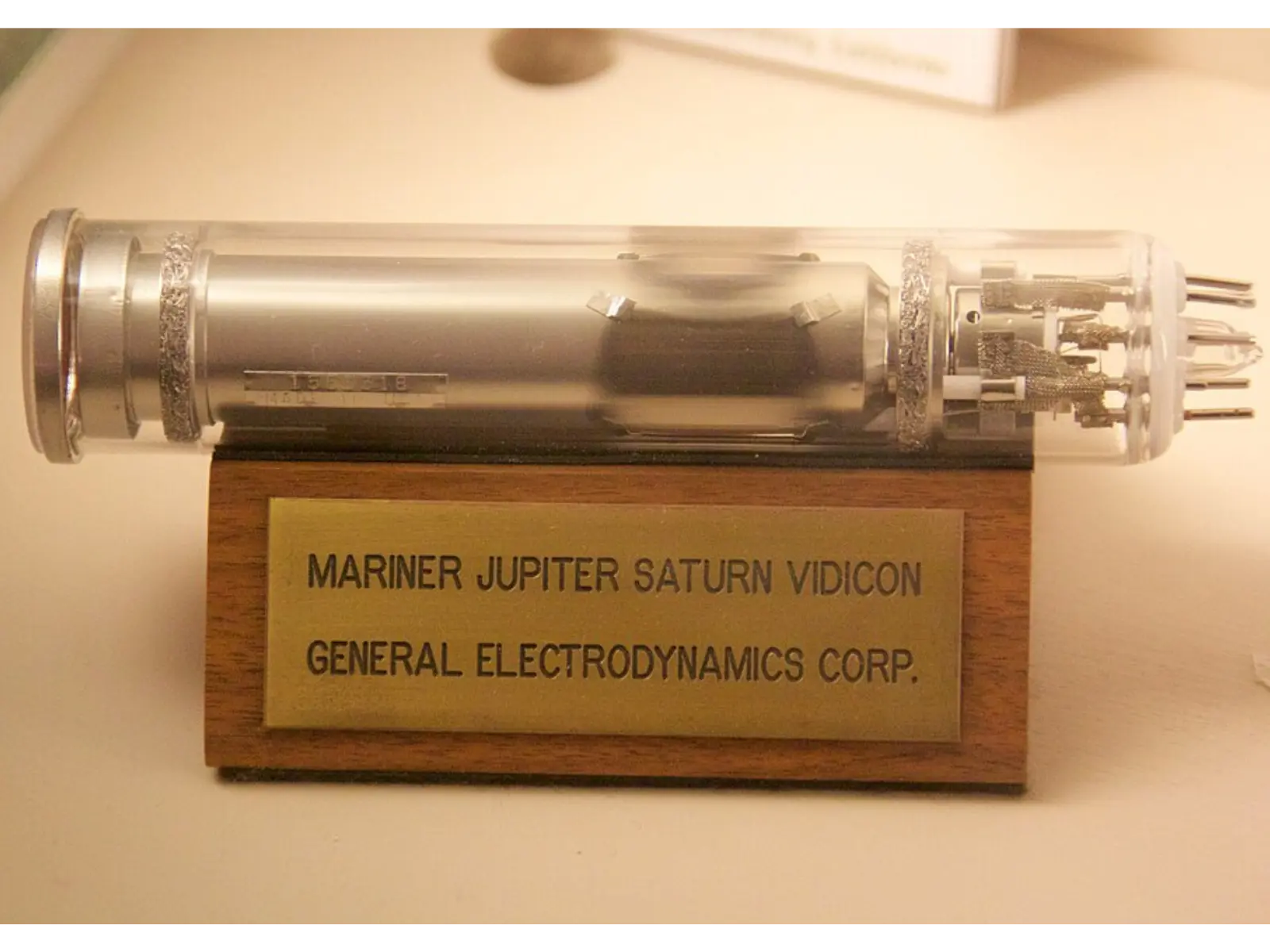
Camera tubes did not stay on Earth. Voyager 1 and 2, launched in 1977, photographed Jupiter, Saturn, Uranus and Neptune with vidicon tubes.
Each Voyager camera used a 25 mm (1-inch) vidicon with a square picture 11.14 mm along each side, read as 800 × 800 pixels. Its diagonal was 15.8 mm: the 16 mm of a 1-inch tube again.
That is almost exactly the size of the IMX533, the 11.3 mm “1-inch square” sensor. We sell it in the ToupTek ATR533 and the Player One Ares and Saturn cameras. The first image we took with our ATR533M came from a sensor almost the same size as Voyager’s.
1969 to the 1990s: chips replace tubes, and keep the names
In 1969, Willard Boyle and George Smith at Bell Labs invented the charge-coupled device, or CCD: a grid of light-sensitive cells on a silicon chip. In 1975, Steven Sasson at Kodak used a Fairchild CCD of 100 × 100 pixels to build the first digital camera. It took 23 seconds to record one black-and-white picture onto a cassette tape.
Through the 1980s and early 1990s, chips replaced tubes in video cameras. A chip needed no glass, no electron beam and no coils, so it was smaller, lighter and tougher.
Camera makers already had lenses built for 1-inch, 2/3-inch and 1/2-inch tubes. So a chip made to replace a 2/3-inch tube was called a 2/3-inch sensor, because it needed the same lens. The name described the lens it worked with, not the chip.
Sensor makers still use this system. Sony’s data sheets describe the IMX585 as “Type 1/1.2”. The word “type” is the honest part: it means “in the class of a 1/1.2-inch tube”.
How to read an inch-type sensor name
The rule of thumb that came out of the tubes is simple: a 1-inch type sensor has a diagonal of about 16 mm, and other sizes scale from there.
- 1/1.2-inch: 16 ÷ 1.2 ≈ 13.3 mm. Our IMX585 is 12.85 mm.
- 2/3-inch: 16 × 2/3 ≈ 10.7 mm. Our IMX429 is 11 mm.
- 4/3-inch: 16 × 4/3 ≈ 21.3 mm. Our IMX294 is 23.2 mm, a little wider than the rule says.
The smallest sensors drift further from the rule. Our 1/2.8-inch sensors measure 6.4 mm across the diagonal, closer to 18 mm per “inch” than 16.
Two more things catch people out:
- A smaller number under the line means a bigger sensor. 1/1.2-inch is larger than 1/1.8-inch, in the same way that a fifth of a cake is more than an eighth.
- The name only fixes the diagonal, roughly. “1/1.8-inch” covers the IMX178 at 7.4 × 5.0 mm and the IMX678 at 7.7 × 4.3 mm. A “square” sensor keeps the diagonal and changes the shape: the IMX533 is a 1-inch type, but 11.3 mm square.
Turn the rule round and the film formats get tube names too. In tube terms, APS-C would be about a “1.8-inch type” and full frame a “2.7-inch type”.
1996: APS film gives us APS-C
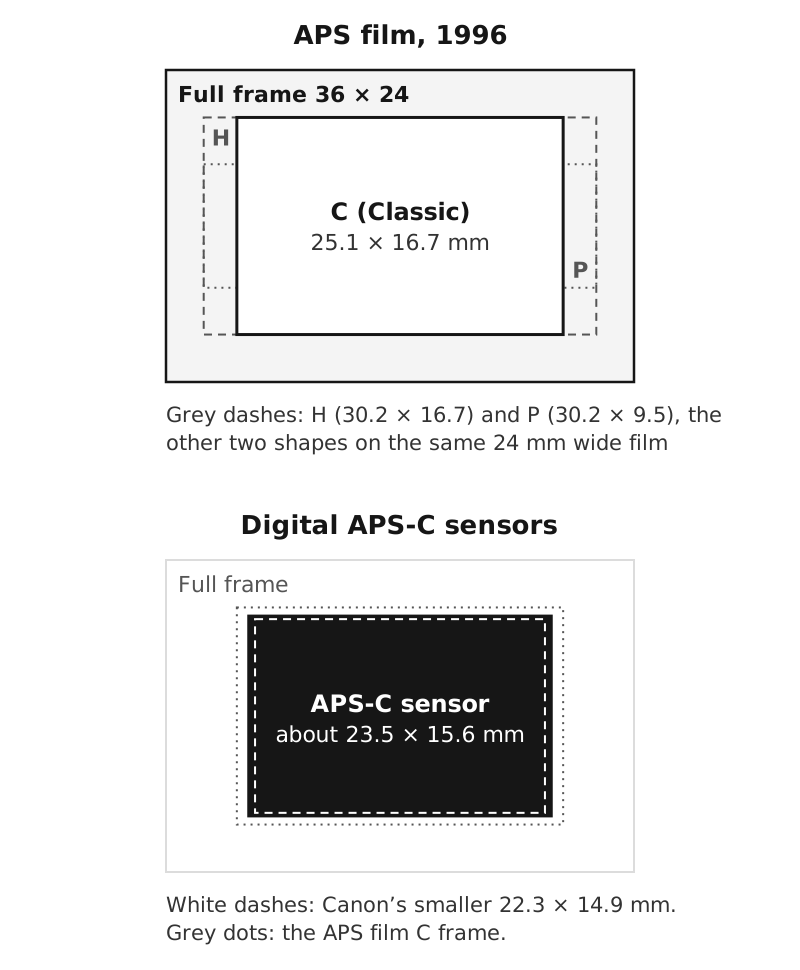
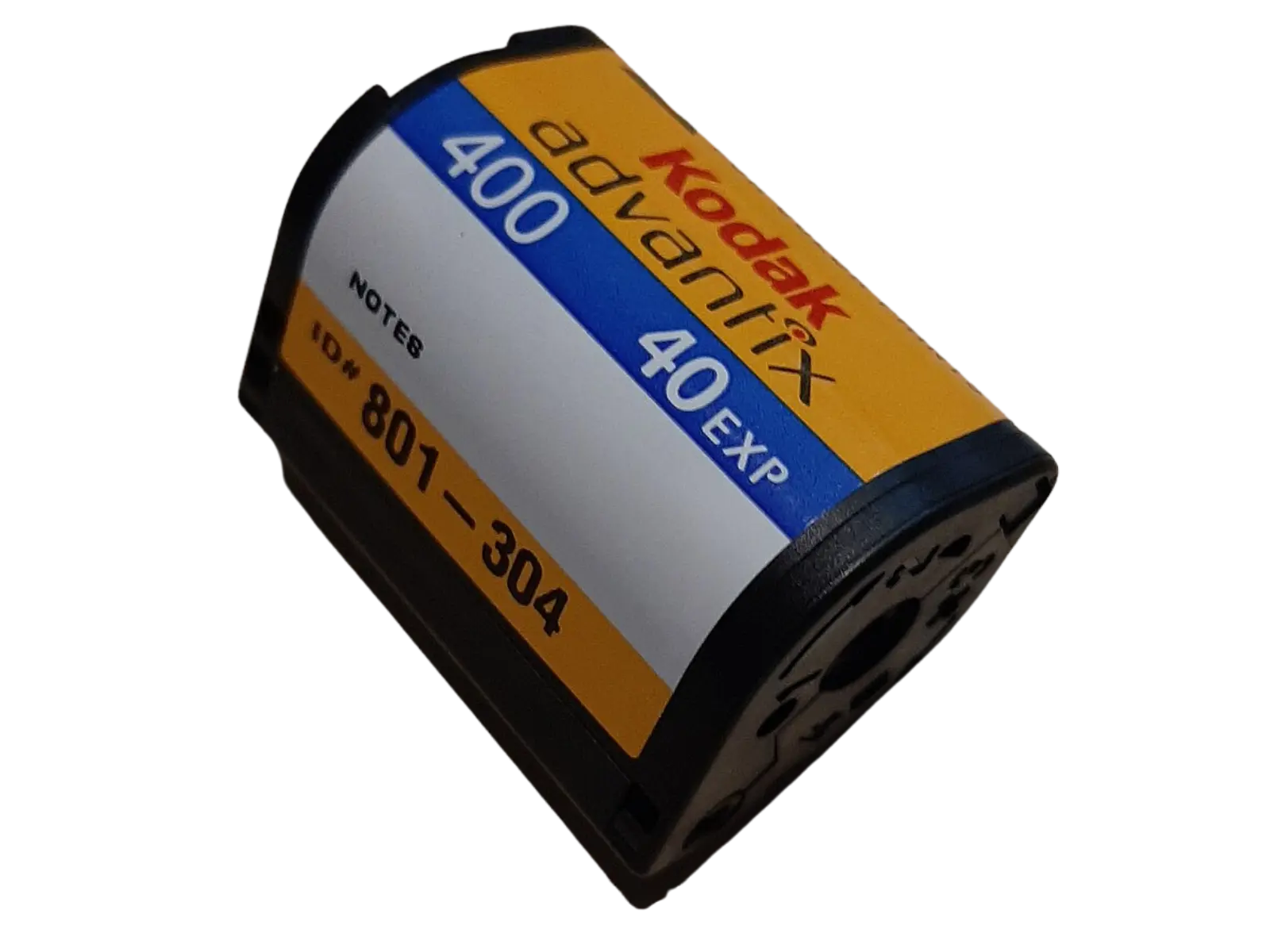
In 1996, Kodak, Fujifilm, Canon, Minolta and Nikon launched the Advanced Photo System, or APS. It used 24 mm film in a drop-in cartridge, and each picture could be taken in one of three shapes:
- H (High definition): 30.2 × 16.7 mm
- C (Classic): 25.1 × 16.7 mm, the 3:2 shape of a normal 35 mm print
- P (Panoramic): 30.2 × 9.5 mm
APS film never caught on widely, and faded as digital cameras took over. But early digital SLR sensors were close to the size of the C frame, so they became known as APS-C.
APS-C is a family, not one size. Canon’s is about 22.3 × 14.9 mm; Sony’s and Nikon’s are about 23.5 × 15.6 mm. The IMX571 in our APS-C cameras is 23.5 × 15.7 mm.
2002: full frame and Four Thirds
Full-size digital sensors were hard and expensive to make. The first digital SLR with a sensor the size of the full 35 mm frame was the Contax N Digital, with a Philips sensor. It reached shops in spring 2002, and Canon’s EOS-1Ds followed later that year.
That is when “full frame” became a common phrase. It meant the full 35 mm film frame, as opposed to the smaller APS-C sensors most digital SLRs used.
In September 2002, Olympus and Kodak announced the Four Thirds system. Its name follows the tube convention: the sensor’s picture area, 17.3 × 13.0 mm, matches what a 4/3-inch tube would give. Olympus and Panasonic’s Micro Four Thirds followed in 2008, with the same sensor size.
Our 4/3-inch sensors, the IMX294 and IMX492, are the same height as Micro Four Thirds but wider: 19.2 × 13.0 mm. Compared with a Micro Four Thirds camera, they take in about 11% more width.
Every format in our cameras, to scale
Here are all twelve sensor formats used in the cameras we sell, drawn to the same scale. Full frame and APS-C are named after film; the other ten are named after camera tubes.
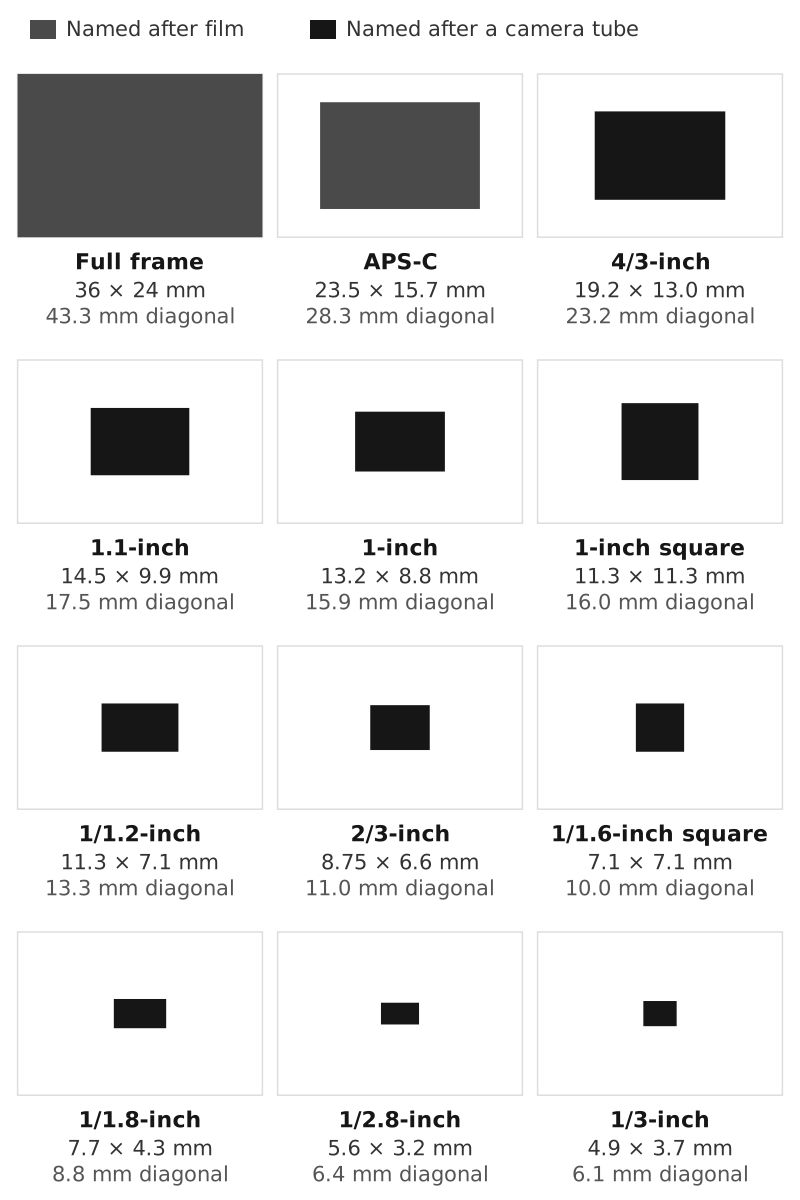
| Format | Named after | Size (mm) | Diagonal | Sensors we sell |
|---|---|---|---|---|
| Full frame | 35 mm film | 36 × 24 | 43.3 mm (1.70″) | IMX455, IMX410, IMX366 |
| APS-C | APS film | 23.5 × 15.7 | 28.3 mm (1.11″) | IMX571 |
| 4/3-inch | Tube | 19.2 × 13.0 | 23.2 mm (0.91″) | IMX294, IMX492 |
| 1.1-inch | Tube | 14.5 × 9.9 | 17.5 mm (0.69″) | IMX428, IMX432 |
| 1-inch | Tube | 13.2 × 8.8 | 15.9 mm (0.63″) | IMX183 |
| 1-inch square | Tube | 11.3 × 11.3 | 16.0 mm (0.63″) | IMX533 |
| 1/1.2-inch | Tube | 11.2 × 6.3 to 11.3 × 7.1 | 12.9–13.4 mm (0.51–0.53″) | IMX585, IMX174, IMX249 |
| 2/3-inch | Tube | 8.75 × 6.6 | 11.0 mm (0.43″) | IMX429 |
| 1/1.6-inch square | Tube | 7.1 × 7.1 | 10.0 mm (0.39″) | IMX676 |
| 1/1.8-inch | Tube | 7.4–7.9 × 4.3–5.0 | 8.8–9.0 mm (0.35″) | IMX178, IMX464, IMX664, IMX678, SC2210 |
| 1/2.8-inch | Tube | 5.6 × 3.1 to 5.6 × 3.2 | 6.4–6.5 mm (0.25″) | IMX462, IMX662, IMX715, IMX290 |
| 1/3-inch | Tube | 4.9 × 3.7 | 6.1 mm (0.24″) | IMX224 |
What sensor size means at the telescope
On a telescope, the sensor size sets three practical things:
- How much sky you see. Field of view in degrees is about 57.3 × sensor width ÷ focal length. On a 1000 mm telescope, the 11.2 mm-wide IMX585 sees 0.64° across; the 36 mm-wide IMX455 sees 2.1°. The full Moon is about 0.5°.
- How big a field your telescope must cover. The telescope’s corrected field should be at least the sensor’s diagonal. If not, the corners show soft stars and darkening. A full-frame sensor needs a field of about 44 mm.
- Which filters you need. Larger sensors need larger filters. Up to about the 1-inch types, 1.25-inch filters usually cover the sensor; full frame needs 2-inch or 50 mm filters. The exact limit depends on the filter’s distance from the sensor and your focal ratio, so check the product page or ask us.
Bigger is not automatically better. Pixel size, and how it suits your focal length, usually matters more than format. Our camera specifications guide explains how to work it out. Small sensors with small pixels are ideal for planets, the Moon and the Sun; large sensors suit wide deep-sky fields. Shop by sensor shows every camera for each sensor, with what each one is good for.
Questions
How big is a 1-inch sensor?
About 13.2 × 8.8 mm, with a diagonal of 16 mm (0.63 inch). The name comes from a 1-inch-diameter camera tube, whose picture was about 16 mm across the diagonal.
Is a 1/1.2-inch sensor bigger than a 1-inch sensor?
No. 1/1.2 means 1 divided by 1.2, so a 1/1.2-inch sensor is about 83% of the diagonal of a 1-inch type: roughly 13 mm against 16 mm.
Is 1/1.2-inch bigger than 1/1.8-inch?
Yes. The smaller the number under the line, the bigger the sensor. A 1/1.2-inch sensor is about 13 mm across the diagonal; a 1/1.8-inch sensor is about 9 mm.
Why is it called full frame?
Because it is the size of the full 36 × 24 mm picture on 35 mm film. The Leica made that frame standard in 1925. Smaller sensors such as APS-C crop that frame.
What does APS-C stand for?
Advanced Photo System, type C. APS was a 1996 film format with three picture shapes; C, for “Classic”, was 25.1 × 16.7 mm. Digital sensors of about that size took the name.
Is 4/3-inch the same as Micro Four Thirds?
Not quite. Micro Four Thirds cameras use a 17.3 × 13.0 mm sensor. The 4/3-inch astronomy sensors we sell, the IMX294 and IMX492, are 19.2 × 13.0 mm: the same height, but wider.
Why do sensor makers still use inches?
Because lenses were designed for camera tubes of standard sizes. A chip that replaced a 2/3-inch tube needed the same lens, so it kept the name. Sony still writes “Type 1/1.2” on its data sheets.
What does 35 mm mean?
The width of the film strip, perforations included. The picture on 35 mm still film is 36 × 24 mm.
Sources
- Dates and frame sizes for 35 mm film: 35 mm movie film and the history of the Leica I, Leica Camera.
- Camera tube history and the two-thirds rule: Video camera tube and Optical format.
- Tube sizes and scanned picture areas: Philips, Plumbicon camera tubes and accessories (1985), and Toshiba, Vidicon tubes (1974).
- The 4½-inch image orthicon: Science Museum Group, Image Orthicon tubes.
- The B4 lens mount: B4-mount.
- Voyager’s cameras: NASA Planetary Data System, Voyager 2 narrow angle camera.
- The first digital camera: IEEE, Handheld digital camera, 1975.
- APS film: Advanced Photo System.
- Four Thirds: Four Thirds system. First full-frame digital SLR: Contax N Digital.
- Sony’s “Type 1/1.2” wording: IMX585 data sheet summary, Sony Semiconductor Solutions, via Framos.
- Sensor sizes for the cameras we sell: Player One and ToupTek data, checked 11 October 2026.
Photo credits
- Leica I, 1925: public domain, via Wikimedia Commons.
- Iconoscopes: Edward M. Noll, 1945, public domain, via Wikimedia Commons.
- 4½-inch image orthicon: Museo Nazionale della Scienza e della Tecnologia Leonardo da Vinci, Milan, CC BY-SA 4.0, cropped and background removed.
- Hitachi vidicon: Kyle Senior, CC BY-SA 4.0, cropped and background removed.
- Voyager vidicon: Mike Peel, via Wikimedia Commons, CC BY-SA 4.0, cropped.
- Kodak Advantix cartridge: Sgroey, CC BY-SA 4.0, cropped and background removed.
Diagrams are our own. Questions about which sensor suits your telescope? Call 01743 224 180 or send us a message.