
Guide cameras
Guide cameras for autoguiding. A guide camera watches a star through a guide scope or an off-axis guider. Software such as PHD2 then tells the mount how to correct its tracking. That keeps stars round through long deep-sky exposures.
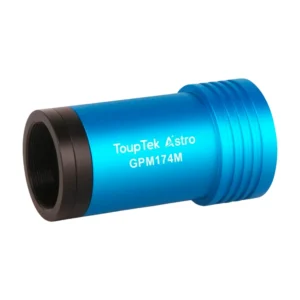
What makes a good guide camera
Sensitivity matters most: the camera has to find a guide star in a second or two, even in a sparse part of the sky. Small and light helps too, so it doesn’t weigh down a guide scope or shift during the night. Most mounts take guiding commands over USB through your imaging software. An ST4 port gives a direct cable to mounts that need it.
Guide scope or off-axis guider
A small guide scope is the simplest set-up and suits short to medium focal lengths. An off-axis guider picks off a star from inside your main telescope, which avoids the two drifting apart. It’s the better choice at long focal lengths. Many planetary cameras make good guide cameras too.
We’ll help you choose
Tell us your telescope and how you guide now, and we’ll suggest a camera that suits. Call 01743 224 180 or send us a question: we answer the same working day.