
Back to
Beginner Telescopes

Sky Watcher Heritage 76

A compact tabletop Dobsonian ideal for beginners, the Sky-Watcher Heritage 76 gives bright, wide-field views of the Moon, planets and bright deep-sky objects with simple “point and look” operation. Lightweight, easy to store and quick to set up, it’s a perfect first “proper” telescope for kids, families and casual stargazers.

£62.00

Availability
Item is usually in stock.

UK Support

Speak to a real person by phone, email, or chat

We handle warranty

We liaise with the manufacturer—no overseas chasing

Easy Returns

Something wrong? Retun your item hastle free

What is the Heritage 76?

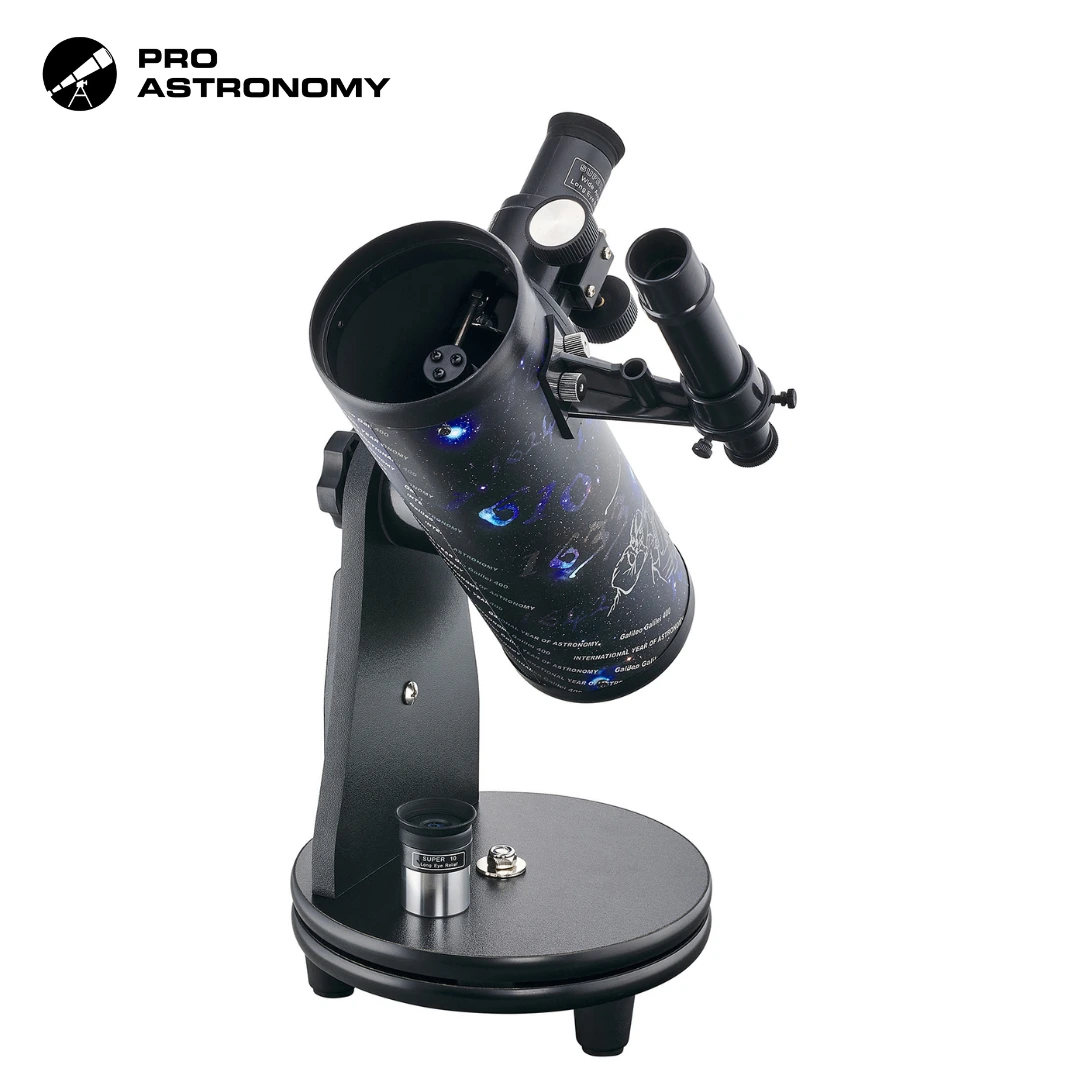
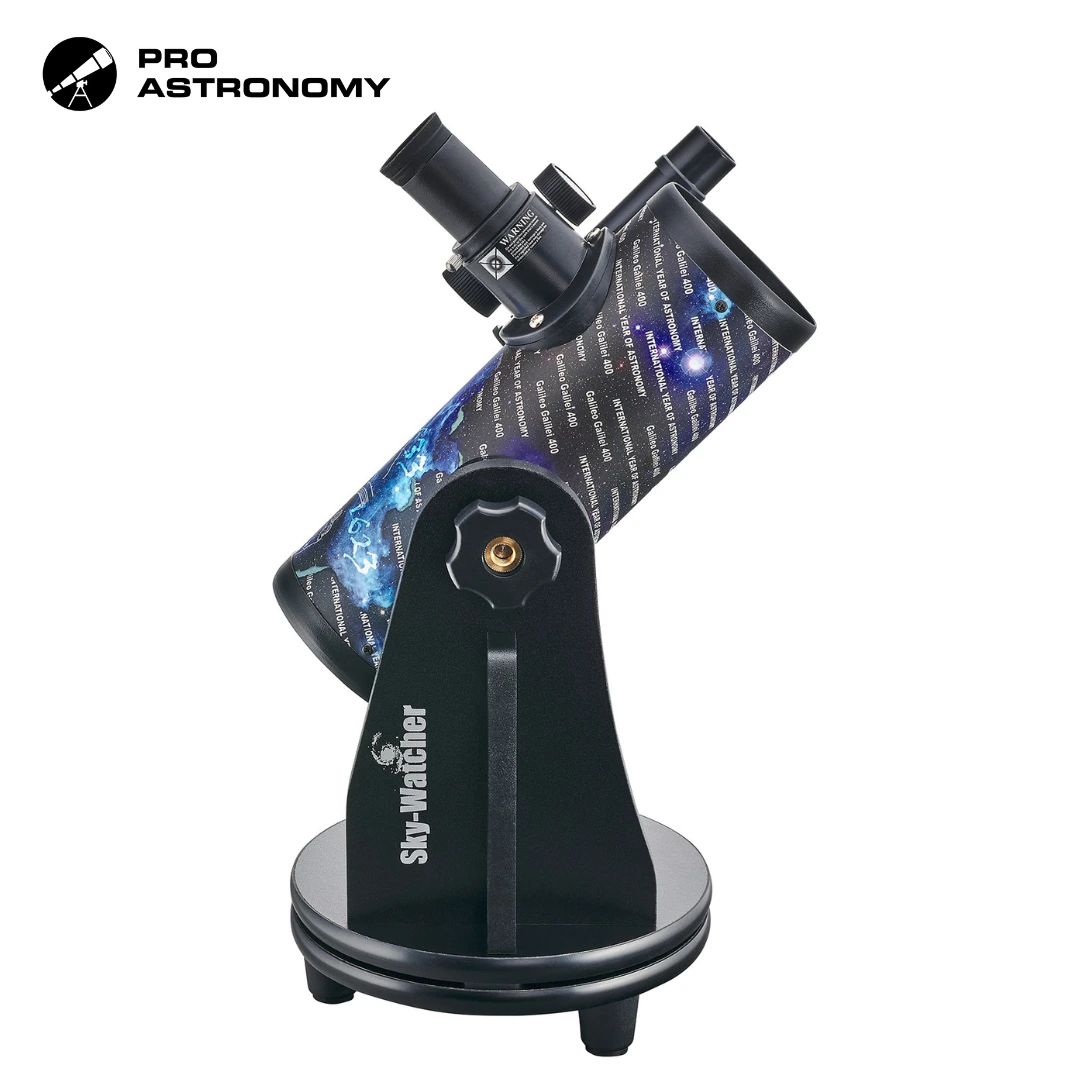
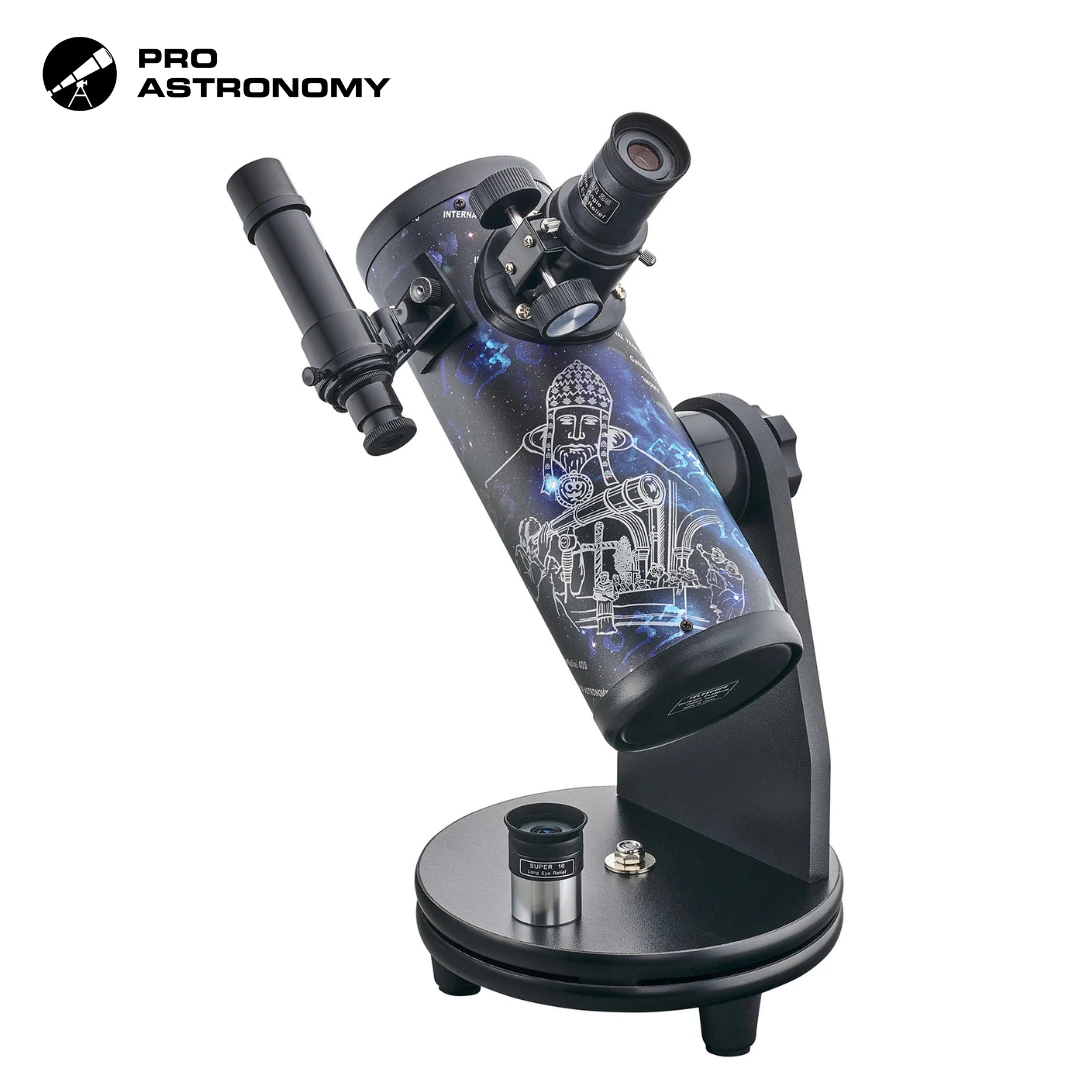
The Heritage 76 is a compact tabletop Dobsonian telescope designed to be a child- and family-friendly “first real telescope”. There’s no kit to build and no complicated mount to learn – you simply place it on a stable surface, point it at the sky and look. With a larger 76mm mirror than most beginner “toy” scopes, it gathers enough light to show the Moon in beautiful detail, reveal Saturn’s rings, Jupiter’s moons and a range of bright star clusters and nebulae. It’s the kind of instrument that can live in the living room or a child’s bedroom and be carried outside at a moment’s notice when the skies clear. As a birthday or Christmas present, it feels like a proper piece of astronomy kit while still being reassuringly simple to use.

Size, Shape & What to Expect

The Heritage 76 is a short, wide-tube reflector that sits in a small wooden rocker base. The whole unit is about the size of a small kitchen appliance and weighs only a few kilos, so most older children can carry it themselves. Because it’s a tabletop Dobsonian, you don’t have to wrestle with a tall tripod – you just pop it on a garden table, low wall or sturdy stool and start observing. Movement is intuitive: you gently nudge the tube up, down, left or right to follow your target, which makes it far easier for beginners than an equatorial mount with lots of knobs.

At the eyepiece you get bright, wide-angle views that make it easier to find and keep objects in view. The Moon looks crisp and three-dimensional, and sweeping along the Milky Way to pick out clusters and star fields becomes a genuinely exciting experience. The scope is solidly built but not precious – it’s happy being moved around the house and taken into the garden, and it doesn’t demand a big setup ritual. For parents, it’s the perfect “grab-and-go” telescope that encourages spontaneous observing sessions rather than becoming yet another gadget that lives in a box.

Why buy from Pro Astronomy?

Parent-friendly expertise
We specialise in helping families choose their first astronomy kit, so you’ll always get clear, jargon-free guidance. Whether it’s a birthday surprise or their first Christmas telescope, we’ll help you pick something your child will genuinely enjoy.

Curated for beginners
Every product we stock is hand-selected for real-world ease of use. No confusing gear, no unnecessary upsells — just reliable, fun, confidence-building equipment that works for young stargazers.

UK-based support
Got a question about assembly, using eyepieces, or what your child can see in the sky? Our UK team is here to help with practical, friendly advice.

Tested and trusted
We thoroughly check the products we sell, focusing on build quality, simplicity and durability — exactly what you need for a child-friendly telescope or science gift.

Helpful learning resources
Alongside your purchase, you get access to our growing Learn section, packed with plain-English guides, beginner tips and activity ideas you can share with your child.

UK Support

Speak to a real person by phone, email, or chat

We handle warranty

We liaise with the manufacturer—no overseas chasing

Custom packages

Bundle the right parts for your rig—tailored pricing available

Easy Returns

Something wrong? Retun your item hastle free

FAQs

Q: Is the Heritage 76 suitable for children and complete beginners?
A: Yes. The Heritage 76 is specifically marketed as an ideal first telescope for younger astronomers (around 5–10 years old) and families, thanks to its simple tabletop Dobsonian mount and small, lightweight tube. An adult will still need to help younger kids aim it and look after it, but there’s no complex setup to learn.

Q: What will we actually be able to see with it?
A: With 76 mm of aperture it’s great on the Moon (craters, mountains and maria), Jupiter and its moons, Saturn’s rings, and brighter star clusters and nebulae. Very faint galaxies and nebulae are limited by the small size of the mirror, so think of it as a “bright objects and easy deep-sky” scope rather than something for serious faint-galaxy hunting.

Q: Does it need assembly or collimation before we can use it?
A: The Heritage 76 comes fully assembled on its wooden tabletop base – you just remove the dust caps, drop in an eyepiece and you’re ready to go. The mirrors are factory-aligned and normally don’t need adjustment out of the box; collimation is something you might only look at much later if you get deeper into the hobby.

Q: Can we take photos through it with a smartphone?
A: You can take fun snapshots of the Moon (and sometimes bright planets) by using a simple smartphone adapter that clamps the phone over the eyepiece – we can recommend this as an accessory for the Heritage 76. It’s not designed for long-exposure deep-sky imaging, so think of it as “recording what you’ve seen” rather than serious astrophotography.

Q: Do we need any extra accessories to get started, and what might we upgrade later?
A: Out of the box you get two eyepieces (10 mm and 25 mm) and a 5×24 finderscope, so you can begin observing straight away. Over time, many owners add a Moon filter, an extra eyepiece or two (for example a slightly higher-power eyepiece or a 2× Barlow), and possibly a smartphone adapter if they’d like to take pictures through the telescope.

Setup

One of the big advantages of the Heritage 76 is that there’s almost no setup – it’s designed to be a true “grab-and-go” telescope.

1. Unbox and place the base

  • Lift the telescope and its wooden base out of the box as one unit.

  • Put it on a solid, waist-height surface such as a garden table, patio wall or sturdy crate.

  • Make sure the base feels stable and can rotate freely left–right.

2. Remove the dust caps

  • Take off the front dust cap from the telescope tube.

  • Remove the cap from the focuser/eyepiece holder.

  • Keep them somewhere safe – you’ll pop them back on when you’re finished observing.

3. Fit the finderscope (first time only)

  • Slide the small 5×24 finderscope into its bracket and tighten the thumbscrew.

  • This only needs to be done once; after that it can stay attached.

4. Insert an eyepiece

  • Start with the 25 mm eyepiece for the lowest power and widest field of view.

  • Drop it into the focuser and gently tighten the thumbscrew so it’s secure but not crushed.

5. Aim at a distant object in daylight

  • For your very first go, do a quick practice in daylight.

  • Point the telescope at a distant chimney, tree or TV aerial and look through the main eyepiece.

  • Use the focuser to bring it to a sharp image.

  • Adjust the finderscope so its crosshairs are centred on the same object – this makes night-time aiming much easier.

6. First night under the stars

  • Take the telescope outside 15–20 minutes before observing so it can cool to outdoor temperature.

  • Point the tube roughly at the Moon (the easiest target), using the finderscope to centre it.

  • Look through the 25 mm eyepiece and gently nudge the telescope to keep the Moon in view as the sky drifts.

  • Once everyone’s had a look, you can swap to the 10 mm eyepiece for a closer view.

From here, setup is simply: place, remove caps, pick an eyepiece, point and look. There are no counterweights, no polar alignment and no complicated knobs to remember, which is why the Heritage 76 works so well for families and absolute beginners.

Not Convinced?

Still not sure this device is for you? Use the contact details and we can help make sure you choose the perfect system for your budget and setup.

Thanks,
Pro Astronomy

+44 (0)1743 224 180